


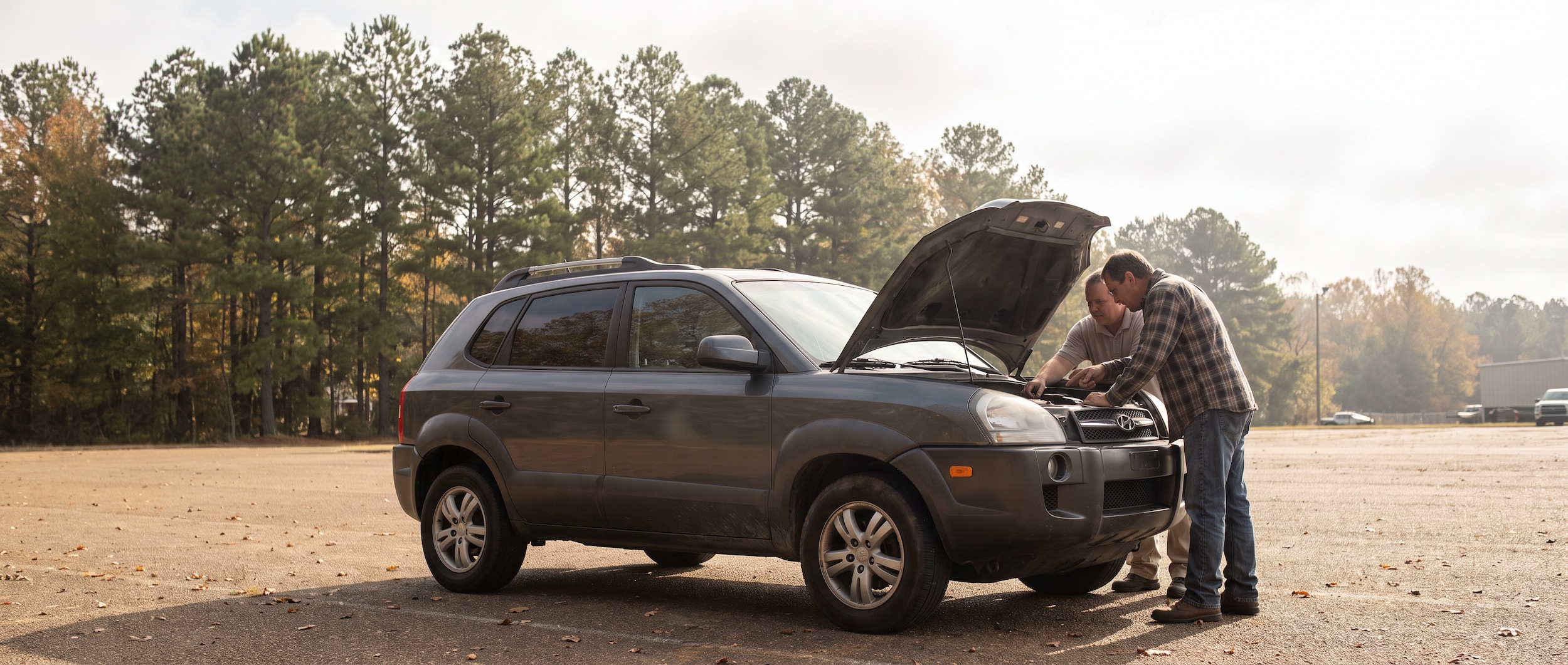
Shopping for a used Hyundai around Pearl is one of the smarter budget moves out there. These cars age well, parts support runs deep, and the lineup covers almost every size and use case. A clean, well-kept example and one carrying an unresolved recall or a heat-stressed part can sit side by side on a lot and look the same, and you won't feel the difference until about three months after you drive home. So walk in prepared. The checklist below gives you exactly what to look for before you sign.
Browse our current pre-owned Hyundai inventory to see what's available right now.
What Goes on the Checklist?
The checklist runs in four passes, and it rewards patience, moving from the vehicle's paper history to under the hood, then the cabin and electronics, and finally the road, with the slow paper work up front so the test drive only confirms what you already know. Print it, fold it, and keep it where you can reach it. You'll work through it top to bottom.
Before you touch the car
- [ ] Pull the full vehicle history report (VIN required)
- [ ] Run the VIN on NHTSA's free recall lookup at nhtsa.gov/recalls
- [ ] Ask the seller for any recall completion paperwork from a Hyundai dealer
- [ ] Cross-check the odometer on the history report against the cluster reading
- [ ] Confirm title is clean (no salvage, flood, or lemon-law buyback notation)
- [ ] Check the model year and engine code. Theta II 2.0L and 2.4L GDI engines appeared in 2011-2019 Sonata, 2013-2019 Santa Fe Sport, and 2014-2019 Tucson models
Under the hood (engine off, then engine on)
- [ ] Look for oil residue on valve covers and around the oil pan
- [ ] Check the airbox for any sign of water ingestion, a real concern in our market after a hard rain
- [ ] Inspect belts, hoses, and the coolant recovery tank for condition and level
- [ ] Confirm battery terminals are clean and free of corrosion (Mississippi heat is hard on 12V batteries)
- [ ] Start the engine cold and listen for the first 30 seconds; knock, rattle, or rough idle are all red flags
- [ ] Check engine oil color. Fresh oil runs golden brown, degraded oil looks dark and gritty
Interior and electrical
- [ ] Cycle every electrical item: windows, locks, climate fan, screen, wipers, all lights
- [ ] Switch ignition on and watch for the airbag warning light (on 2021-2022 Elantra and Santa Fe models, a damaged circuit board can cause the rearview camera image to fail. Per NHTSA)
- [ ] Test the backup camera image specifically, with the car in reverse
- [ ] Confirm all ADAS features (lane warning, forward collision, blind-spot monitoring) give normal operation cues
- [ ] Check for any mustiness or damp smell inside. Low-lying roads around Pearl can push water into footwells after heavy storms
- [ ] Inspect seat bolsters and upholstery; condition tracks how the car was actually used
Tires, brakes, and suspension
- [ ] Check tread depth on all four corners (including the spare)
- [ ] Look for uneven wear patterns. Cupping or inside-edge wear often points to alignment or suspension issues
- [ ] Look and feel for brake dust buildup behind the wheels; excessive buildup may indicate stuck calipers
- [ ] Bounce each corner of the car and listen for clunks from shocks or struts
Test drive (at least 15-20 minutes, including a stop-and-go stretch)
- [ ] Accelerate gently through every gear range, then once at full throttle
- [ ] Shift to Reverse and back to Drive; note any shudder or hesitation (dual-clutch-equipped Elantra and Tucson models generated documented DCT complaints for hesitation and jerking. Worth paying attention to)
- [ ] Drive a stop-and-go stretch similar to what you'd experience on Lakeland Drive; ADAS lane-keeping and braking should feel consistent, not jumpy
- [ ] Apply brakes firmly from highway speed on a safe stretch. Stopping should be straight and strong
- [ ] Turn the A/C to max cold and confirm it reaches proper cold quickly; Mississippi summers will test that system hard
Why These Items Matter
The Tucson and the Sonata are the two used Hyundais worth the closest read on this list, partly because they drive beautifully for the money and partly because they sit on top of the two biggest documented risk categories in NHTSA's database, so the cars that reward you the most won't let you skip the homework.
The Theta II engine issue is the one to check for first. Per NHTSA's consent orders, Hyundai conducted untimely recalls of over 1.6 million vehicles equipped with Theta II engines. The affected range covers the 2.0L and 2.4L GDI versions used in 2011-2019 Sonata, 2013-2019 Santa Fe Sport, and 2014-2019 Tucson models. The core failure mode is metal debris left in oil passages during manufacturing, which drives premature bearing wear and, in serious cases, engine seizure. A 2023 class-action settlement extended eligible engine damage coverage for qualifying vehicles. Some used Hyundais on the market right now may still be covered as a result. You can't tell from the outside which cars still qualify, so run the VIN and confirm the recall was actually completed. Ask for the dealer paperwork. If the car falls in that range and the seller can't prove the fix was done, factor it into your decision.
The dual-clutch transmission issue is less dramatic, though more common in everyday ownership. Per documented NHTSA complaint data, the 7-speed DCT in certain Tucson and Elantra models generated widespread reports of hesitation, jerking at low speeds, and sudden power loss. The test-drive protocol above is built to surface exactly that. A DCT acts up most in slow stop-and-go, which is what Lakeland Drive hands you in afternoon traffic. We didn't line the list up that way by accident.
Two names, two tests: The Theta II recall is a paperwork-and-cold-start check, and the DCT issue is a slow-traffic test-drive check. Clear both and you've handled the two biggest documented risk categories on this list.
The Elantra carries its own electrical flag. NHTSA documented that certain 2021-2022 Elantra and Elantra HEV vehicles had a damaged printed circuit board that caused rearview camera failure. Backup camera function is a federal safety standard requirement. If that camera won't show a clean image in reverse, treat it as a hard stop, not a fix-it-later line item.
We're in central Mississippi. The summers here run long and humid.
The stop-and-go heat on the Lakeland Drive corridor, or the stretch of I-20 through Pearl, does things to rubber, battery terminals, and coolant hoses that a car from a drier climate simply wouldn't show at the same mileage. When we inspect used vehicles, we look hard at two spots in particular:
- The airbox, for water ingestion residue
- The coolant hose condition around the clamps
Those two spots turn up more often here than any national checklist would suggest.
Schedule a pre-purchase service inspection with our team and we'll run the mechanical points on any used Hyundai you're serious about, no matter where you found it.
A note on Hyundai's recall lookup: nhtsa.gov/recalls is free, takes about 90 seconds, and gives you a live VIN-specific result. One important detail is this. A recall showing as "open" means the fix hasn't been completed on that specific car. A recall that doesn't appear may have already been remedied, or the car may simply not be in the affected population. Always ask for completion paperwork from a Hyundai authorized dealer, not just a printed recall report showing the campaign number.
| Checklist Item | Why It Matters for Used Hyundai Buyers |
|---|---|
| NHTSA VIN recall check | Open Theta II and electrical recalls are still common on 2011-2019 models |
| Cold-start engine listen | Knock or rough idle at cold start is a key early warning sign of bearing wear |
| DCT behavior on slow roads | Hesitation and jerking at low speeds is the documented symptom on affected Elantra and Tucson models |
| Rearview camera image | A circuit board recall affected 2021-2022 Elantra and Santa Fe HEV; camera failure fails federal safety standards |
| Airbox water ingestion check | Rain events and standing water around Pearl can push moisture into intake systems |
| Battery terminal condition | Mississippi summer heat accelerates terminal corrosion on 12V batteries faster than cooler climates |
| Brake dust and caliper check | Stuck calipers wear pads and rotors quickly; easy to catch visually before a test drive |
| Title and mileage consistency | Odometer discrepancies and flood titles are the two most common used-car surprises nationally |
Schedule a Pre-Purchase Inspection
Your Print-and-Go Recap
Bring this page to the lot with you, and don't try to memorize a word of it, just read it in order and check each box as you go, because the used Hyundai that earns every check is a far safer bet than the one that leaves you staring at blanks. You don't need to hold any of it in your head. You just need to work through the list in order.
Before you touch it: VIN history report, NHTSA recall lookup, recall completion paperwork from the seller, clean title confirmed.
Under the hood: No oil residue on valve covers, no airbox water sign, belts and hoses in good shape, clean battery terminals, smooth cold start with no knock.
Inside: Every electrical feature cycles correctly, airbag light clears, rearview camera shows clean image, no damp smell.
Tires and brakes: Even tread all around, no cupping or inside-edge wear, no stuck calipers.
Test drive: Smooth acceleration through all gears, no DCT hesitation in slow traffic, A/C reaches full cold quickly, firm and straight braking from highway speed.
If a box doesn't check out, treat it as useful information. Panic helps no one. Use it as a negotiating point, or a signal to keep looking. A used Hyundai that clears this checklist in good shape is a genuinely solid buy. An unchecked box is telling you something.
When you're ready to move forward, our team can walk you through the numbers on any vehicle you're considering.
Frequently Asked Questions
Does every used Hyundai have the Theta II engine recall?
No. The Theta II engine recall covers specific model years and engine codes, not every Hyundai ever made. The most commonly affected vehicles are 2011-2019 Sonata models, 2013-2019 Santa Fe Sport models, and 2014-2019 Tucson models equipped with the 2.0L or 2.4L GDI Theta II engines. Newer models and other engine families sit outside that recall population. To check a specific car, enter its VIN on the NHTSA recall lookup at nhtsa.gov/recalls. You'll get a VIN-specific result showing any open campaigns on that exact vehicle.
What's the difference between an "open" recall and one that's already been fixed?
An open recall means the required repair hasn't been completed on that specific vehicle. A recall that doesn't appear on a VIN lookup may have already been remedied at a Hyundai authorized dealer. The key is to ask the seller for the dealer completion paperwork, because a printout of the NHTSA campaign number doesn't prove the fix was done. If a used Hyundai you're considering falls in an affected model-year range and the seller can't show you written confirmation from a Hyundai dealer that the remedy was performed, that gap is a meaningful one in the vehicle's history.
Categories:
Social


